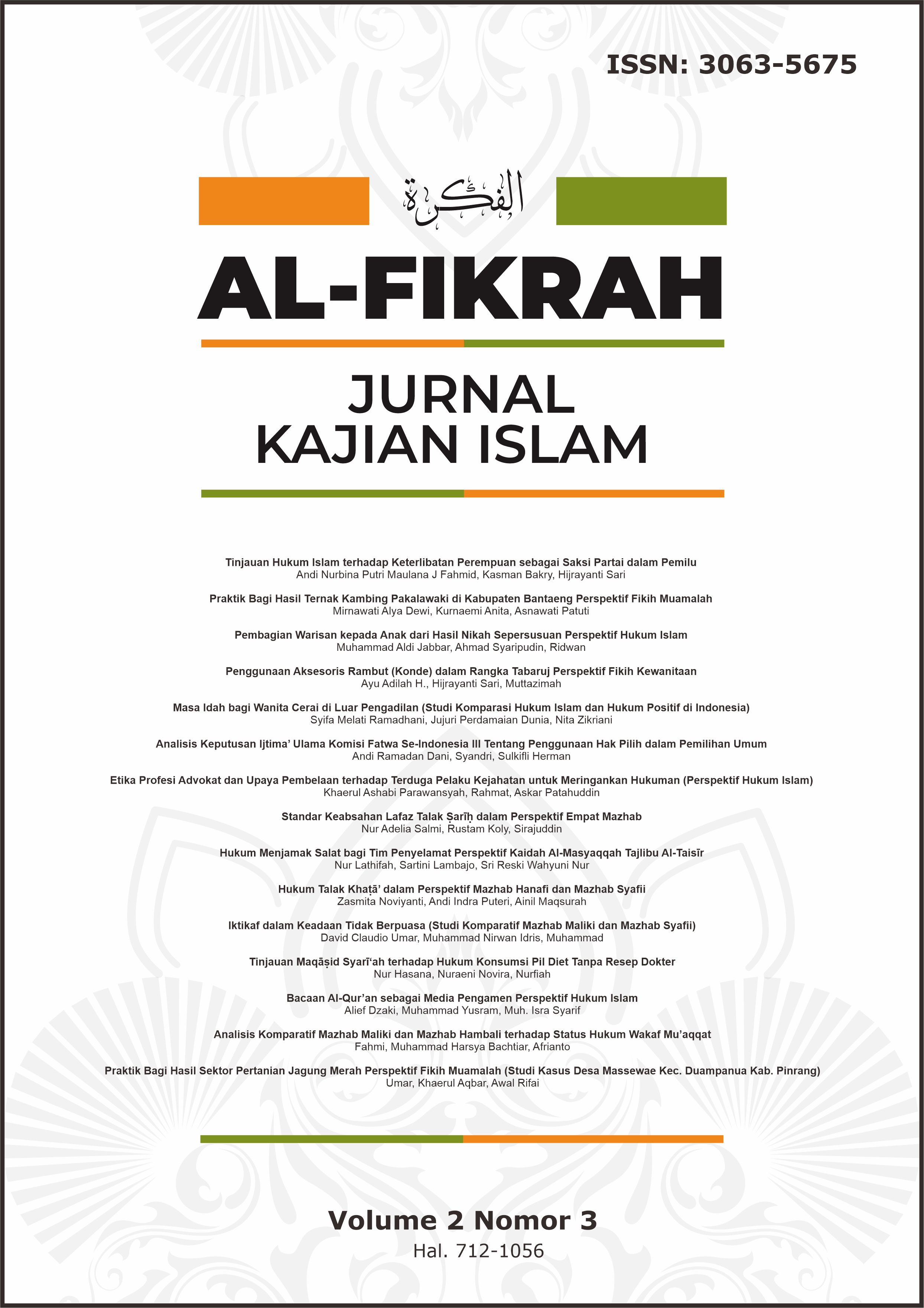
Bacaan Al-Qur’an sebagai Media Pengamen Perspektif Hukum Islam
The Use of Qur'anic Recitation in Street Performance: A Study from the Perspective of Islamic Law
DOI:
https://doi.org/10.36701/fikrah.v2i3.2486Keywords:
the qur'an, street performing, islamic law, islamic etiquette, scholarly fatwaAbstract
The Qur'an is the final holy book revealed by Allah (SWT) to the Prophet Muhammad (PBUH) through the angel Jibril, containing teachings of monotheism, worship, law, and moral values, and serving as a guide for Muslims throughout time. In today’s social reality, a phenomenon has emerged known as Qur’anic street performing, where individuals recite Qur'anic verses in public while asking for donations. This study aims to examine the practice from the perspective of Islamic law, focusing on the role of the Qur'an in Muslim life, the social background behind this phenomenon, and scholarly views on the matter. The research uses a literature review method, referring to sources such as tafsir, Islamic jurisprudence, fatwas, and relevant academic works. Findings indicate that although reciting the Qur’an is a noble act of worship, using it as a means of busking is seen as disrespectful to its sanctity. Many scholars argue that such a practice contradicts Islamic principles, as it blends acts of devotion with material gain. Therefore, public education on the proper etiquette of Qur'anic recitation is needed, along with proactive involvement from religious leaders and policymakers to provide wise solutions to this kind of social issue and to urge the public not to give money to those who recite the Qur’an as street performers.
Downloads
References
Al-Qur’an al-Karīm
Buku
Al-Albānī, Muḥammad Nāṣir al-Dīn, Ṣaḥīḥ al-Jāmiʿ al-Ṣaghīr wa Ziyādātuh. Cet. I;Beirut: al-Maktab al-Islāmī, 1408H/1988M.
Almunadi. Studi Ilmu-Ilmu Al-Qur’an. Cet. I; Palembang: NoerFikri Offset, September 2016.
Badan Pengembangan dan Pembinaan Bahasa, Kamus Besar Bahasa Indonesia (KBBI). Edisi V. Cet. II; Jakarta: Kementrian Pendidikan dan Kebudayaan Republik Indonesia, 2016.
Al-Bukhārī, Abū ʿAbdillāh Muḥammad bin Ismāʿīl. Ṣaḥīḥ al-Bukhārī. Cet. V; Damaskus: Dār Ibn Kaṡīr, Dār al-Yamāmah, 1414H/1993M.
Al-Dāusarī, Maḥmūd ibn Aḥmad ibn Ṣāliḥ ibn Saif al Madāwī, ʿIẓamat al-Qur’ān al-Karīm, Cet. I; Saudi Arabia: Dār Ibn al Jawzī, 1426H/2005M.
Al Dimasyqī, Abū al Fidāʾ Imād al-Dīn Ismāʾīl ibn ʿUmar ibn Kaṡīr ibn Dawī ibn Darʿī al Qurashī al Bashrawī. Tafsīr al-Qur’ān al-‘Aẓīm. Cet. I; Lebanon: Dār al-Kutub al-‘Ilmiyyah, 1419 H/1998 M.
Al-Suyūṭī, Jalāl al-Dīn. Al-Itqān fī ‘Ulūm al-Qur’ān, tahkik: Muḥammad Abū al-Faḍl Ibrāhīm. Cet. I; Kairo: al-Hai’ah al-Miṣriyyah al-‘Āmmah li al-Kitāb, 1394H/1974M.
Kementerian Wakaf dan Urusan Islam Kuwait, Mausūʿah al-Fiqhiyyah al-Kuwaitiyyah Cet. II; Kuwait: Wizārah al-Auqāf wa al-Suʾūn al-Islāmiyyah, 1442M/1992M.
Al-Naisābūrī, Muslim ibn al-Ḥajjāj al-Qusairī, Ṣaḥīḥ Muslim. Cet. I; Turki: Dār al-Ṭibā‘ah al-Amīrah, 1334H/1916M.
Al-Nawāwī, Abū Zakariyyā Muḥyī al-Dīn Yaḥyā ibn Syaraf, Al-Tibyān fī Ādāb Ḥamalah al-Qur’ān. Cet. I; Libanon: Dār Ibn Ḥazm li al-Ṭibāʿah wa al-Nasyr wa al-Tawzīʿ, 1414H/1994M.
Al-Saʿdī, Abdul al-Raḥmān ibn Nāṣir ibn ʿAbdillāh, Taisīr al-Karīm al-Raḥmān fī Tafsīr Kalām al-Manān. Cet. I; Lebanon: Muʾassasat al-Risālah, 1420H/2000M.
Sahir, Syafrida Hafni, Metodologi penelitian. Cet. I; Penerbit KBM Indonesia, Mei 2021.
Al-Sijistānī, Abū Dāūd Sulaimān ibn al-Asy‘aṡ, Sunan Abī Dāūd. Cet. I; Dar al-Risālah al-‘Ālamīyyah, 1430H/2009M.
Al-Tirmiżī, Abū ‘Īsā Muḥammad ibn ‘Īsā, Al-Jāmi‘ al-Kabīr Sunan al-Tirmiżī. Cet. I: Bairūt Dār al-Gharb al-Islāmī, 1417H/1996 M.
Al-Ṭabarānī, Abū al-Qāsim Sulaimān ibn Aḥmad, Al-Muʿjam al-Ausaṭ. Cet. I; Kairo: Dār al- Haramain, 1415H/1995M.
Al-Ṭabarī, Abū Jaʿfar Muḥammad ibn Jarīr, Tafsīr al-Ṭabarī: Jāmiʿ al-Bayān ʿan Taʾwīl Āy al-Qurʾān, tahkīq oleh ʿAbd Allāh ibn ʿAbd al-Muḥsin al-Turkī, Cet. I; Kairo: Dār Hajr, 1422H/2001M.
Al-Zarkasyī, Imām Badr al-Dīn, Al-Burhān fī ‘Ulūm al-Qur’ān. Cet. I; Lebanon: Dār Iḥyā’ al-Kutub al-‘Arabiyyah, ‘Īsā al-Bābī al-Ḥalabī, 1376H/1957M.
Jurnal Ilmiah, Skripsi dan Situs/Web online
Bramasta, Bayu, and Rahmad Setyo Jadmiko. "Analisis Faktor Penyebab Keberadaan Pengamen Jalanan Di Kabupaten Tulungagung." Wahana Sekolah Dasar 31, no. 1 (2023): 75.
Fatimah, H. S., Muhammad Alwi HS, and Muflihah Muflihah, "Fenomena Pengamen Al-Qur’an dan Implikasi Sosial Keagamaannya." Jurnal SMART (Studi Masyarakat, Religi, dan Tradisi) 9, no. 2 (2023): h. 231-235.
Hassan, Juwairiah, "Kepentingan Etika Tilawah Al-Quran Dan Kesannya terhadap Bacaan Al-Quran." Jurnal 'Ulwan 3, no. 1 (2019): 135-140.
Kembuan, Tabita Yudea, Jenny Nelly Matheosz, and Maria Heny Pratiknjo, "Kehidupan Pengamen Jalanan di Kawasan Boulevard Kota Manado." HOLISTIK, Journal of Social and Culture (2021): h. 2-9.
Lafiri, Firmansyah, https://muisulsel.or.id/mui-sulsel-rilis-fatwa-perdana-haramkan-memberi-pada-pengemis-di-jalan/ (2021).
Nurdin, Aulia Anjani, dkk., “Analisis Teori Sosiologi Hukum pada Peristiwa Eksploitasi Pengamen dan Anak Jalanan di bawah Umur” Jurnal Ilmiah Multidisiplin 2, no 5. (2024): h. 2.
Panggabean, Yoga Parulian, dkk., “Konsep Diri Pengamen Angklung di Jalan Sudirman, Kecamatan Patrang, Kabupaten Jember” Khatulistiwa: Jurnal Pendidikan dan Sosial Humaniora 3, no. 4 (2023): h. 249.
Putra, Aldo Marezka, Alfan Shidqon, and Zakiyan Rifqa, "Tradisi Mengamen Dengan Al-Qur’an: Kajian Living Qur’an di Pantai Purus Kota Padang." El-Afkar: Jurnal Pemikiran Keislaman dan Tafsir Hadis 12, no. 2 (2023): h. 464.
Putra, Randy Rahma, dkk. ”Peningkatan Kualitas Bacaan Al-Qur’an Melalui Metode Metode Talakki pada Murid TPQ Desa Landbaw”, Jurnal Pengabdian Sosial dan Kemanusian 1 no. 4 (2024): h. 1-2.
Pringgar, Rizaldy Fatha, and Bambang Sujatmiko, "Penelitian kepustakaan (library research) modul pembelajaran berbasis augmented reality pada pembelajaran siswa." IT-Edu: Jurnal Information Technology and Education 5, no. 1 (2020): h. 319-320.
Downloads
Published
Issue
Section
License
Copyright (c) 2025 Alief Dzaki, Muhammad Yusram, Muh. Isra Syarif

This work is licensed under a Creative Commons Attribution-NonCommercial-ShareAlike 4.0 International License.