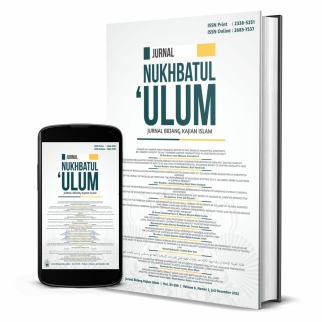
 NUKHBATUL 'ULUM: Jurnal Bidang Kajian Islam is a peer-reviewed academic journal published biannually (June and December) by the Lembaga Penelitian dan Pengabdian Masyarakat (LPPM), Institut Agama Islam STIBA Makassar, Indonesia. The journal focuses on the advancement of scholarship in the field of Islamic Studies (Dirasah Islamiyah), covering both classical and contemporary issues related to Islamic thought, law, education, economics, society, and other interdisciplinary studies within the broader framework of Islamic scholarship.
The journal welcomes original research articles, conceptual papers, and scholarly discussions from researchers, academics, and practitioners in related disciplines. Manuscripts are accepted in English and Arabic. All submitted manuscripts undergo a rigorous Double-Blind Peer Review process to ensure academic quality, originality, and relevance to the journal’s scope. The views and opinions expressed in published articles are solely those of the authors and do not necessarily reflect the official views of the editors, publisher, or affiliated institutions.
NUKHBATUL 'ULUM: Jurnal Bidang Kajian Islam has been accredited by National Journal Accreditation (ARJUNA) Managed by Ministry of Research, Technology, and Higher Education of Republic Indonesia with Third Grade (Sinta 3) since 2019 to 2025 according to the decree No. 148/M/KPT/2020, 3 August 2020 and currently indexed and/or included by Google Scholar, Crossref, Copernicus, Dimensions, Publons, ISJD, One Search, Garuda, CiteFactor, PKP Index, Moraref, BASE, DRJI, Worldcat, Academic Resource Index, LIPI, SIS, Kudos,EuroPub, and ResearcGate.
Authors who want to submit their manuscript to the editorial office of NUKHBATUL 'ULUM: Jurnal Bidang Kajian Islam should obey the writing guidelines. If the manuscript submitted is not appropriate with the guidelines or written in a different format, it will be rejected by the editors before further reviewed. The editors will only accept the manuscripts which meet the assigned format.
Based on the journal's editorial statistics, the overall manuscript acceptance rate is approximately 35%, indicating a selective editorial policy. Manuscripts are accepted solely on the basis of scholarly merit, originality, methodological rigor, academic contribution, and relevance to the journal's scope. Editorial decisions are made independently and are not influenced by publication fees or authors' financial capacity. The journal is committed to maintaining high standards of academic quality, publication ethics, and editorial integrity in accordance with internationally recognized best practices in scholarly publishing.
NUKHBATUL 'ULUM: Jurnal Bidang Kajian Islam also has a CrossRef Member. Therefore, all articles published by NUKHBATUL 'ULUM: Jurnal Bidang Kajian Islam will have unique DOI number.
| Journal title | : NUKHBATUL 'ULUM: Jurnal Bidang Kajian Islam |
| Initials | : NUKHBAH |
| Frequency | : 2 issues per year (June and December) |
| DOI | : Prefiks 10.36701 by  |
| ISSN Print | : 2338-5251 |
| ISSN Online | : 2685-7537 |
| Editor-in-chief | : Khaerul Aqbar |
| Managing Editor | : Azwar |
| Publisher | : LPPM, Institut Agama Islam STIBA Makassar |
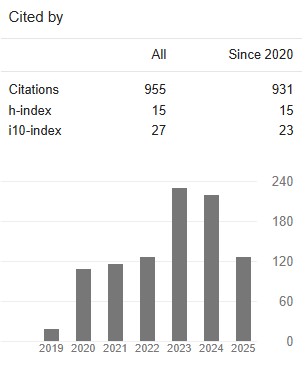
| Citation Analysis | : Google Scholar, Scopus |
NUKHBATUL 'ULUM: Jurnal Bidang Kajian Islam is currently indexed and/or included by :














OAI Address
NUKHBATUL 'ULUM: Jurnal Bidang Kajian Islam has OAI address:
https://journal.stiba.ac.id/index.php/nukhbah/oai?metadataPrefix=oai_dc&verb=ListRecords

This work is licensed under a Attribution-NonCommercial-ShareAlike 4.0 International (CC BY-NC-SA 4.0)
Current Issue
Vol. 12 No. 1 (2026): NUKHBATUL 'ULUM: Jurnal Bidang Kajian Islam
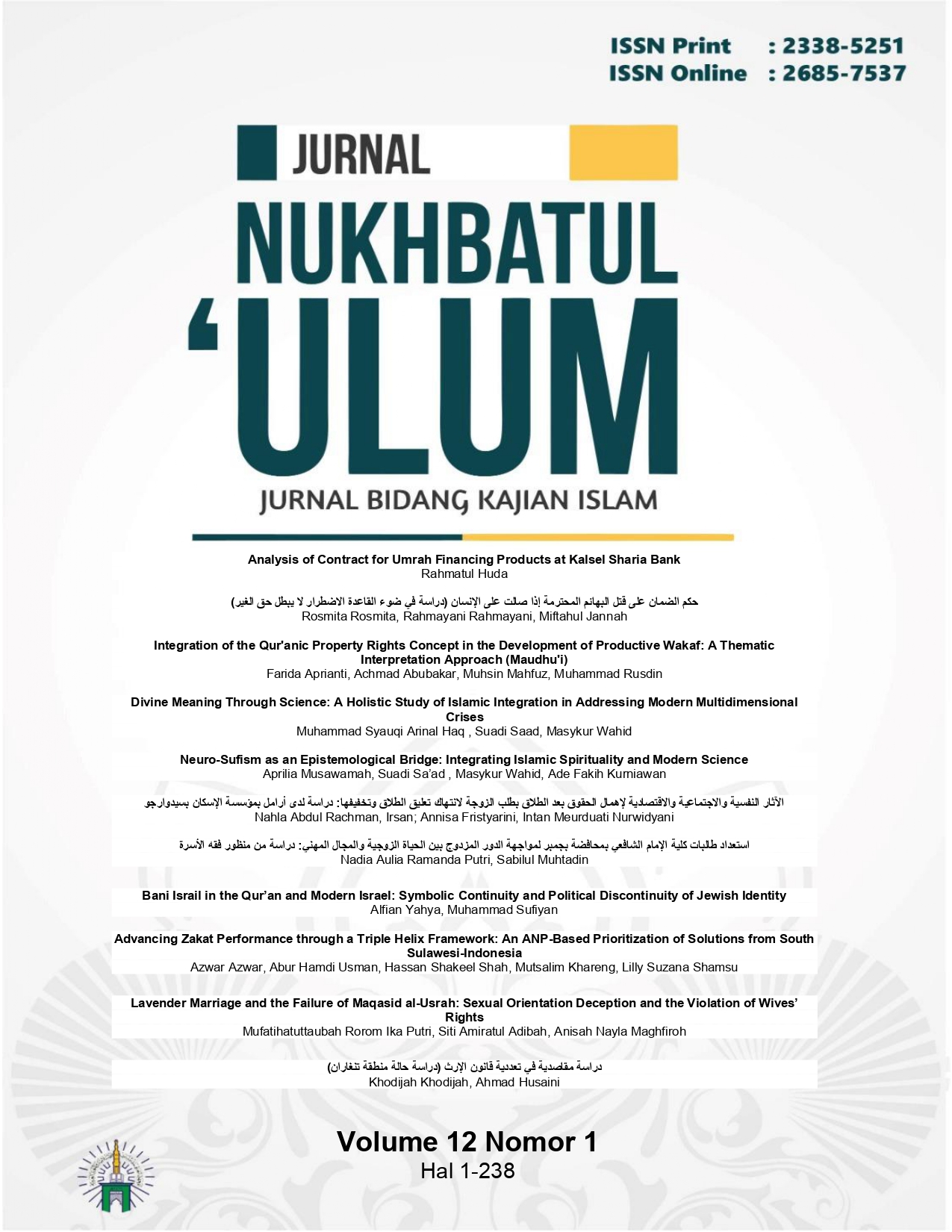
The latest issue of NUKHBATUL ’ULUM: Jurnal Bidang Kajian Islam, Volume 12, Issue 1 (2026), presents a collection of original research articles that explore a wide range of contemporary and classical themes in Islamic studies, encompassing Islamic finance, Qur’anic studies, tafsīr, waqf, zakat, maqāṣid al-sharī‘ah, Islamic family law, theology, and interdisciplinary studies integrating Islam with modern science. The contributions address diverse topics, including contractual mechanisms in Islamic umrah financing, the jurisprudential ruling on compensation for killing protected animals in cases of necessity, the integration of Qur’anic concepts of property rights into productive waqf development, holistic approaches to the integration of Islam and science in addressing multidimensional crises, neuro-sufism as an epistemological bridge between Islamic spirituality and contemporary scientific thought, the psychosocial and economic implications of neglected post-divorce rights, the readiness of female university students to balance marital and professional responsibilities from the perspective of Islamic family jurisprudence, symbolic continuity and political discontinuity between Banī Isrāʾīl in the Qur’an and modern Israel, strategic priorities for enhancing zakat performance through a Triple Helix framework, maqāṣid-based critiques of lavender marriage and the protection of wives’ rights, as well as a maqāṣid al-sharī‘ah analysis of legal pluralism in inheritance law. This issue features 11 original articles authored or co-authored by 33 researchers affiliated with institutions across 8 countries—Indonesia, Brunei Darussalam, Egypt, Gambia, Malaysia, Pakistan, Saudi Arabia, and Thailand. The diversity of institutional affiliations and international scholarly collaboration represented in this volume reflects the journal’s continuing commitment to advancing globally relevant Islamic scholarship. Collectively, the articles demonstrate the richness of contemporary Islamic intellectual discourse by integrating classical Islamic sciences with interdisciplinary approaches to address emerging legal, social, economic, and humanitarian challenges in the modern world.


Published:
2026-06-26
Articles
-
Analysis of Contract for Umrah Financing Products at Kalsel Sharia Bank
-
حكم الضمان على قتل البهائم المحترمة إذا صالت على الإنسان (دراسة في ضوء القاعدة الاضطرار لا يبطل حق الغير) The Ruling on Compensating for the Killing of Respected Animals if They Attack a Human (The Principle of Necessity does Not Nullify the Right of Others)
-
Integration of the Qur'anic Property Rights Concept in the Development of Productive Wakaf: A Thematic Interpretation Approach (Maudhu'i)
-
Divine Meaning Through Science: A Holistic Study of Islamic Integration in Addressing Modern Multidimensional Crises
-
Neuro-Sufism as an Epistemological Bridge: Integrating Islamic Spirituality and Modern Science
-
اﻵثار النفسية واﻻجتماعية واﻻقتصادية لإهمال الحقوق بعد الطلاق بطلب الزوجة لانتهاك تعليق الطلاق وتخفيفها: دراسة لدى أرامل بمؤسسة اﻹسكان بسيدوارجو Psychosocial-Economic Implications and Mitigation: Post Wife Initiate Divorce Rights Neglect Due to Taklik Talak Breach among Al-Iskan Sidoarjo Widows
-
استعداد طالبات كلية الإمام الشافعي بمحافضة بجمبر لمواجهة الدور المزدوج بين الحياة الزوجية والمجال المهني: دراسة من منظور فقه الأسرة The Readiness of Final-Year Students at Imam Al-Shāfi‘ī College Jember in Facing Dual Roles Between Marriage and Work: A Family Jurisprudence Perspective
-
Bani Israil in the Qur’an and Modern Israel: Symbolic Continuity and Political Discontinuity of Jewish Identity
-
Advancing Zakat Performance through a Triple Helix Framework: An ANP-Based Prioritization of Solutions from South Sulawesi-Indonesia
-
Lavender Marriage and the Failure of Maqasid al-Usrah: Sexual Orientation Deception and the Violation of Wives’ Rights